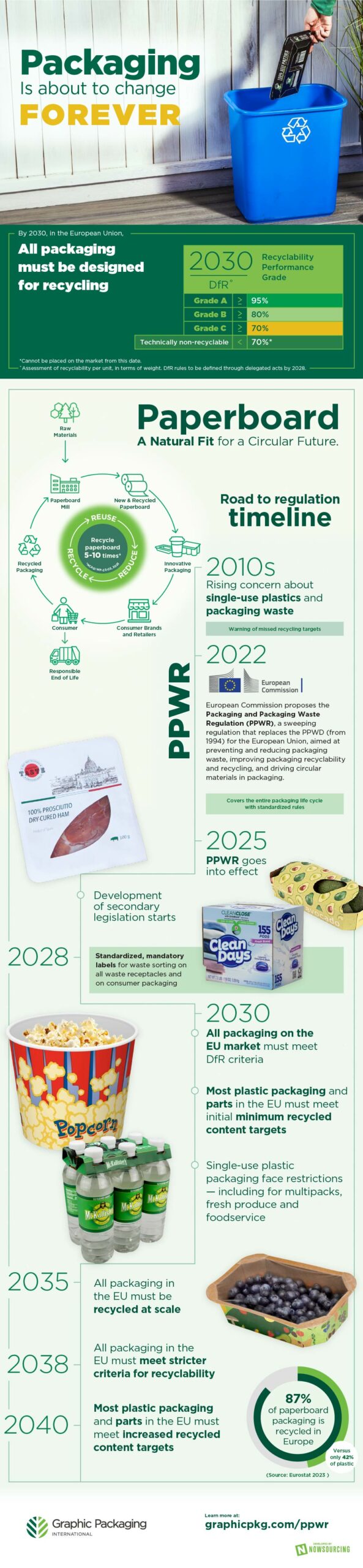
The push for companies to make their packaging more recyclable is growing stronger as worries around plastic pollution continue to increase. Europe especially is making it their goal to make all packaging in the market be recyclable by 2030 through the Packaging and Packaging Waste Regulation (PPWR).
The PPWR applies to all packaging entering the European Union, which means multinational companies need to adhere to the new requirements. Many global brands are likely to respond by adjusting their entire packaging structure across markets as it helps with simplifying operations, so PPWR could lead to global regulatory change instead of just a regional one.
The new regulation depends on a performance-based approach that ensures the highest percentage of a product’s materials can be recycled. Packaging is strictly assessed using grades A, B, and C. Packaging that score below Grade C’s 70% recyclability threshold are considered non-recyclable and cannot enter the EU market.
The new regulation means packaging that is easy to recycle, supported by strong collection systems, and made with acceptable recycled materials is the most acceptable option. Paperboard fulfills each requirement. Paperboard packaging is recovered more than plastic, making the paperboard infrastructure established enough to reduce compliance risk and make it easier to meet recyclability targets. Paperboard has a circular design as well, with fibers that can be recycled repeatedly. Fiber-based packaging gives brands a way to navigate around strict restrictions, especially on single-use plastic packaging while being efficient with resources.
The EU aims to cut packaging waste by 15% within the next 14 years, presenting consumer brands with both an opportunity and a constraint. Companies that seriously consider alternatives and embrace materials like paperboard early will be able to adapt to the rise in sustainability as a necessity instead of an option while gaining a competitive edge in the market.